
The Startup Column:Reassessing the Startup Ecosystem of Taiwan’s Six Major Cities – Hsinchu
The Hsinchu region, historically known as “Tek-kham(竹塹),” has evolved into a global hub of the semiconductor industry since the establishment of the science park in the late 1970s. The region is not only home to TSMC and a complete semiconductor supply chain, but also hosts national-level research institutions such as the Industrial Technology Research Institute(ITRI) and the Taiwan Space Agency, bringing together Taiwan’s top technological talent and innovation capabilities.
According to the 2025 Global Startup Ecosystem Index Report published by StartupBlink, Hsinchu rose significantly to 96th place worldwide, entering the top 100 startup ecosystems for the first time, highlighting the strong international competitiveness of its startup ecosystem.
1. Entrepreneurial Support Organizations
Hsinchu’s startup support system is characterized by strong integration across industry, academia, and research, with clearly defined roles among institutions that together provide comprehensive support for startups.
1.1 Startup Hubs and Maker Spaces
The government has established a diverse range of startup hubs and workspaces in Hsinchu. The “Young Entrepreneur’s Studio(竹青庭),” operated by the Hsinchu Science Park Bureau under the National Science and Technology Council, provides dedicated office space for young entrepreneurs. The Ministry of Labor has also established Taiwan’s only fashion-focused maker space in Hsinchu City, the “Fashion Design Maker Space(衣啟飛翔),” offering support in design and brand marketing. In addition, the Hsinchu County Government, in collaboration with Minghsin University of Science and Technology, operates the Hsinchu Startup Hub. Together with the Hsinchu Social Innovation Hub, launched in 2025, these hubs further expand support for social enterprises and a broader range of social initiatives.
1.2 Accelerators
Hsinchu’s accelerator ecosystem relies heavily on corporate resources. The “Hsinchu AIoT Accelerator,” jointly launched by the Hsinchu County Government and StarFab Accelerator, has facilitated collaboration between 32 startups and 13 leading local enterprises, including Coretronic Corporation, Wistron Corporation, and Hwa Hsia Glass Co., Ltd.. It has also supported startups in expanding into overseas markets, including Singapore.
In the biomedical field, National Yang Ming Chiao Tung University established the GlintMED Accelerator, which integrates semiconductor expertise from Sunplus Technology and Hermes-Epitek. The program supports biomedical startups in hardware-software integration while providing guidance on regulatory requirements and fundraising.
1.3 Incubation Centers
More than half of Hsinchu’s incubation centers are affiliated with universities, including National Tsing Hua University, National Yang Ming Chiao Tung University, Chung Hua University, and Minghsin University of Science and Technology. The remainder are established by research institutions, such as the Agricultural Technology Research Institute, which focuses on agricultural biotechnology, and the incubation center of the Industrial Technology Research Institute, which specializes in ICT, green energy, and biotechnology. Leveraging their strong R&D capabilities, these institutions provide deep-tech startups with robust technical support.
1.4 Investment Institutions
Hsinchu is home to 124 investment institutions, with a highly distinctive structure: nearly 80% are corporate venture capital (CVC) firms. These are primarily backed by major electronics companies, including Phison Electronics, MediaTek, and Sino-American Silicon Products Inc.. Beyond capital, these investors provide startups with access to supply chain resources and opportunities for technology validation. Alumni-founded angel networks from National Tsing Hua University and National Yang Ming Chiao Tung University, including TEN Incubation Corporation and the Tsinghua Angels Club, as well as the Taiwan ITRI New Venture Association, also play a key role in early-stage funding matchmaking.
1.5 Startups
As of October 2025, the Hsinchu region has a total of 678 startups, accounting for approximately 6.8% of Taiwan’s total, with around 90% currently in operation. The sector distribution reflects a strong hard-tech orientation:
-
Hardware (24.5%): The largest segment, highlighting the region’s strong semiconductor and electronics foundation.
-
Health care (14.2%): Smart healthcare, leveraging ICT capabilities, is the second-largest sector.
-
Manufacturing (10.8%). In addition, energy (6.3%) and biotechnology (5.2%) are also important areas of development. The top five sectors together account for more than 60% of all startups.
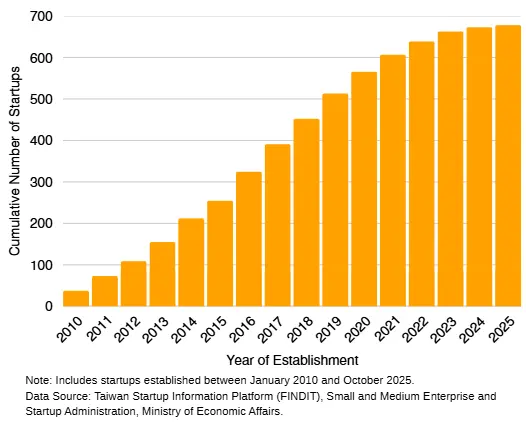
Fig. 1: Number of Startups Established in Hsinchu
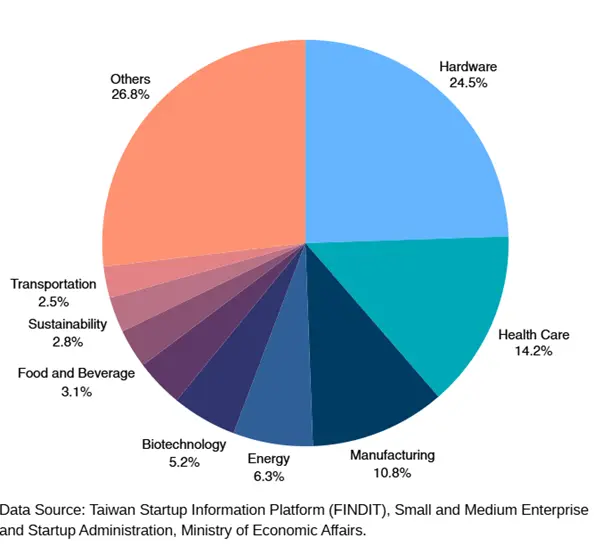
Fig. 2: Distribution of Key Sectors of Startups in Hsinchu
1.6 Notable Startups
The Hsinchu region is home to a number of high-potential deep-tech startups:
-
Neuchips: Originating from National Tsing Hua University and programs supported by the National Science and Technology Council, Neuchips focuses on the design of high-performance AI accelerator chips. More than 80% of its team members come from leading semiconductor companies.
-
Bora Biologics: Specializing in CDMO services for biologics, the company has established world-class manufacturing capacity. In May 2025, it merged with Tanvex BioPharma to form a leading, globally competitive biologics company.
-
WCC Biomedical: The company develops highly specialized microneedle array patches (MAP). It has received recognition through the Moderna Taiwan mRNA Innovation Award and certification from the U.S.-based global health organization PATH. The company is expected to be listed on the Emerging Stock Board in 2026.
-
FREE Bionics: A spin-off from the Industrial Technology Research Institute, FREE Bionics develops powered exoskeletons and has entered the Japanese and European markets. Its overseas revenue has already surpassed domestic revenue, making it a benchmark case for the global expansion of medical assistive devices.
1.7 Funded Startups
Capital serves as a key indicator of technological value. As of June 2025, a total of 324 startups in the Hsinchu region have received investment, with cumulative funding reaching NT$75.95 billion (approximately US$2.45 billion) and an average deal size of around NT$150 million.
Notably, 38 of these funded startups originated from government projects or research institution spin-offs, reflecting strong investor confidence in their underlying technological capabilities. By sector, 93% of energy startups have received funding, followed by health care (66.7%) and hardware (60.8%), highlighting strong capital market interest in the green energy transition and deep-tech innovation.
2. Summary
Taken together, Hsinchu’s startup ecosystem demonstrated strong maturity and momentum in 2025. Driven by the “Taoyuan-Hsinchu-Miaoli Greater Silicon Valley(桃竹苗大矽谷)” initiative, the region has transformed its semiconductor manufacturing strengths into innovation and R&D capabilities. Supported by active corporate venture capital, strong technical expertise, and a global perspective, Hsinchu is evolving from Taiwan’s technology manufacturing hub into a key global center for deep-tech entrepreneurship.


![[ 2025 Taiwan Startup Investment Trends Annual Report – Overview ] Resilience and Challenges: Insights from Taiwan’s Startup Investment](https://findit.org.tw/Files//ResArticle/dea67192-bcf0-4611-b9fd-456b224b54ef.webp)