

The Startup Column: Reassessing the Startup Ecosystem of Taiwan’s Six Major Cities – Taichung
In recent years, Taichung has performed strongly in both global and domestic rankings. In 2024, it ranked fourth among Asia’s most walkable cities and placed first in the “County and City Happiness Index.” The city comprises 29 administrative districts, forming a highly integrated economic network.
In terms of transportation infrastructure, following the launch of the Taichung Mass Rapid Transit (TMRT) Green Line, construction of the Blue Line officially began in 2025. Together with five additional lines currently in planning, as well as the goal of achieving full bus electrification by 2030, Taichung is rapidly advancing its digitalization efforts and smart city development. Building on its well-established transportation, healthcare, and education systems, the Taichung City Government has also actively expanded its international engagement. With 43 sister cities worldwide, Taichung offers startups strong gateways to overseas markets.
This article examines Taichung’s startup landscape from two key perspectives: development indicators and government support measures, and concludes with observations on the future development of the local entrepreneurial ecosystem.
1. Startup Indicators: Scale and Sector Analysis
According to data from the FINDIT platform, as of April 2025, Taiwan has a total of 9,727 startups established between January 2010 and April 2025, excluding non-company entities. Of these, 847 are located in Taichung, underscoring its role as the primary startup hub in central Taiwan. By sector, Taichung’s startup landscape is relatively concentrated, with the top six sectors accounting for a combined 51% of all startups: health care and biotechnology (12%), manufacturing (11%), food and beverage (9%), consumer goods (8%), other hardware (6%), and software (5%).
In terms of investment activity and exit performance, Taichung-based startups recorded a cumulative total of 224 deals between 2015 and Q1 2024, with total disclosed funding reaching NT$24.12 billion. The leading sectors by investment were manufacturing (24.1%) and health care and biotechnology (16.1%). Compared with nationwide trends, investment activity in Taichung is more concentrated in manufacturing and biomedical-related fields.
On the capital markets side, since 2020, central Taiwan has seen two startups listed on the OTC market (Mister International and Alar Pharmaceuticals), seven companies registered on the Emerging Stock Board (e.g., Ever Fortune AI and Shine-On BioMedical), and one company listed on the Taiwan Innovation Board (DuoGenic StemCells).
2. Support System: Academic Platforms and Incubation Bases
Taichung is home to 17 universities and colleges, serving as a key source of innovation talent. National Chung Hsing University, one of the seven major science and technology innovation platforms under the National Science and Technology Council, plays a leading role in the commercialization of research outcomes. The city currently has 11 organizations with accelerator or incubation functions, including Chung Shan Medical University, which operates an accelerator focused on aging-related industries, Feng Chia University, and the Footwear and Recreation Technology Research Institute. These universities and innovation platforms provide advanced technologies to both startups and established industries, while academic-driven entrepreneurship also creates broader career pathways for research talent.
In addition, Taichung hosts seven major startup hubs, including the “Star Picking Youth for Realizing Dreams in Taichung” Startup Hub[2.1] (Guangfu New Village and Shenji New Village), STARTUP@NCHU, and the Taichung Social Innovation Unit. Private-sector resources, such as Regus and Monospace coworking spaces, are also active. Overall, the support system reflects a collaborative model in which the public sector provides resources, universities lead implementation, and private operators offer complementary workspace.
3. Government Policy: Resource Provision and Integration
The Taichung City Government, through its Economic Development Bureau and Labor Affairs Bureau, allocated over NT$27.74 million in 2024 to implement six major initiatives, including the Youth Entrepreneurship Launch Program[3.1]. To support early-stage ventures, the city has also established a “One-stop Youth Entrepreneurship in Taichung” portal, providing consulting and mentorship, market matchmaking, startup loans (up to NT$5 million), and interest subsidies.
As one of the government’s key initiatives, the 2025 local SBIR program prioritizes funding for six sectors, including net-zero emissions, health care and biotechnology, and metal and machinery. In recent years, funded companies such as Dr. Plant, Foreaider, and Pin Tech have demonstrated strong innovation momentum, reflecting a shift from traditional industries toward digital services.
4. Future Outlook: Established Strengths and Emerging Sectors
The number of startups in Taichung has grown from 250 in 2020 to 847 in 2025, indicating that the ecosystem is in a phase of rapid expansion. Its key advantages include:
1) Cost competitiveness: Compared with Taipei, Taichung offers lower rental costs and a higher quality of life, supporting a better work-life balance.
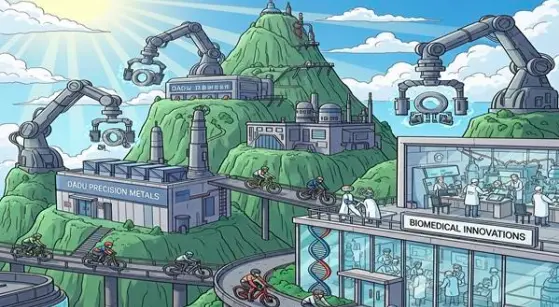
2) Industrial integration: Taichung is home to the “60-kilometer Golden Valley” along Mt. Dadu, a major cluster for precision machinery. Startups in manufacturing and hardware can integrate seamlessly with established supply chains.
3) Diversified growth drivers: Health care and software services are creating new growth opportunities for a city traditionally centered on manufacturing.
Taken together, Taichung has evolved from a traditional manufacturing base into a startup-friendly environment with strong growth potential. Looking ahead, maintaining policy consistency and enabling more early-stage startups to overcome funding constraints will be critical to determining whether Taichung can emerge as a leading startup hub in Asia.

![[ 2025 Taiwan Startup Investment Trends Annual Report – Overview ] Resilience and Challenges: Insights from Taiwan’s Startup Investment](https://findit.org.tw/Files//ResArticle/dea67192-bcf0-4611-b9fd-456b224b54ef.webp)