
[ 2025 Taiwan Startup Investment Trends Annual Report – Semiconductor ] AI and HPC Drive IC Design Growth, Advanced Materials and Silicon Photonics Show Strong Potential
The global semiconductor market is projected to reach US$728 billion in 2025, sparking a strong rebound in Taiwan’s early-stage investment landscape. Total funding in the first half of 2025 reached US$212 million, with the full-year total expected to surpass US$400 million. Capital is increasingly concentrated in mid-to-late stage startups, with strategic investors (CVCs) accounting for approximately 70% of participation. A structural shift in IC design shows High-Performance Computing (HPC) replacing communications as the primary growth driver, while silicon photonics and Silicon Intellectual Property (SIP) see renewed momentum. Investment in manufacturing and materials now targets HPC bottlenecks, focusing on advanced packaging, Silicon Carbide (SiC) capacity, and supply chain localization. Supported by government programs like the NT$5.7 billion IC Design Pinnacle Subsidy, Taiwan’s startups are evolving into global "value co-creation partners" focused on technical milestones and ESG compliance.
1. Global Semiconductor Market Recovery and Taiwan Investment Outlook
Following a downturn in 2023, the global semiconductor market rebounded strongly in 2024 to US$631 billion and is projected to expand further to US$728 billion in 2025. Driven by a new growth cycle led by artificial intelligence (AI), high-performance computing (HPC), and automotive electronics, Taiwan’s early-stage semiconductor investment market has also regained momentum. Between 2015 and the first half of 2025, a total of 306 investment deals were recorded in Taiwan’s semiconductor sector, with cumulative funding reaching US$1.62 billion. Although deal activity declined in 2024, total funding in the first half of 2025 has already reached US$212 million, with the full-year total expected to exceed US$400 million.
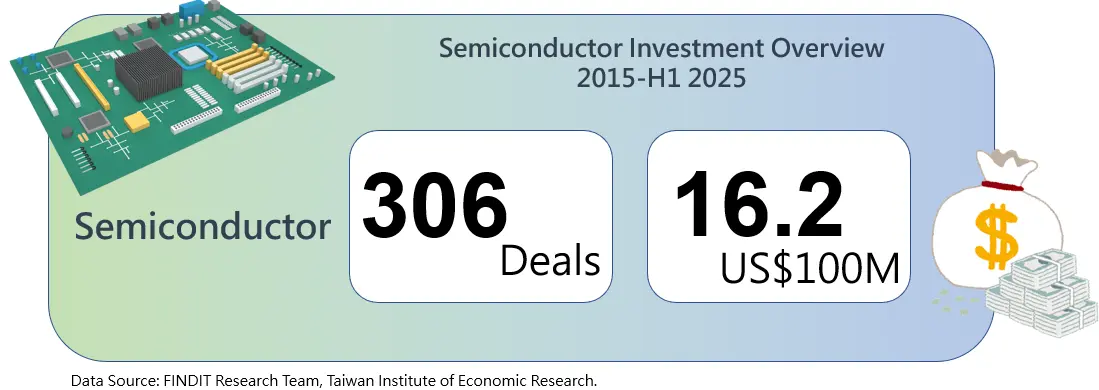
Fig. 1: Investment Overview in the Semiconductor Sector
Capital in the semiconductor market is becoming increasingly concentrated. In the first half of 2025, the average deal size rose significantly to US$10.6 million, with investment primarily directed toward mid- to late-stage startups at a scalable stage. The median founding year of funded companies is 2017.
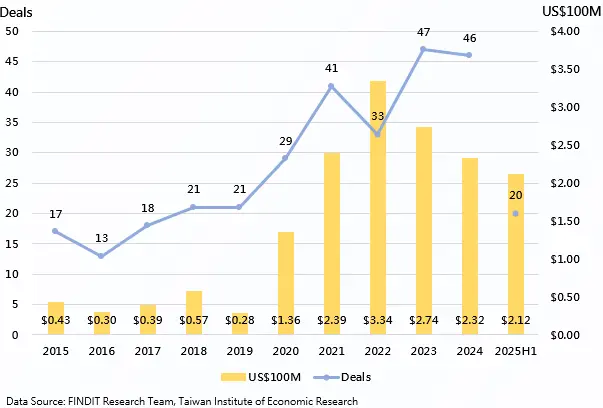
Fig. 2: Annual Semiconductor Investment Trends in Taiwan
Strategic investors (C/CVC) account for approximately 70% of participation, indicating that major industry players are actively investing to gain exposure to emerging technologies. The most active participants include the National Development Fund, Marketech International, UMC Capital, and ELAN Microelectronics.
2. Structural Transformation in IC Design
The Integrated Circuit (IC) design subsector is undergoing a structural transformation, with high-performance computing (HPC) replacing communications as the primary growth driver. The share of HPC-related deals surged from 0% in 2016 to 43% in 2024. In contrast, communications-related investment has declined significantly due to the slower-than-expected rollout of 5G applications, with total funding falling from its peak in 2020 to just US$200,000 in 2024.
At the same time, investment in silicon photonics has accelerated, driven by growing demand from data centers, with total funding reaching a record high of US$29 million in 2024. Taiwanese companies such as Centera Photonics and AuthenX are strategically targeting key segments of the value chain to strengthen their position within the global co-packaged optics (CPO) ecosystem.
In cybersecurity and technology licensing, post-quantum cryptography (PQC) and silicon intellectual property (SIP) are also showing strong potential. Startups such as Jmem Tek focus on application-level integration to address compliance requirements across both the semiconductor and financial sectors. Meanwhile, the rise of AI and chiplet architectures has revived SIP investment after five years of relative inactivity. Companies such as StarRiver Semiconductor and Skymizer have secured significant funding in high-speed interface IP and AI inference accelerator IP, signaling Taiwan’s return as a key player in the global SIP landscape.
3. Strategic Convergence in Manufacturing and Advanced Packaging
Investment in semiconductor manufacturing and packaging has shifted from early-stage exploration and is now focused on HPC system bottlenecks. Investment is concentrated in four key areas: advanced packaging, power efficiency, memory and Compute Express Link (CXL) integration, and precision measurement. Companies such as Phoenix Pioneer and Uniconn have secured substantial funding in IC substrates and load boards, aiming to improve yield and thermal performance in advanced packaging. Leveraging its dense industrial clusters, Taiwan is moving toward a more integrated, data-driven platform that brings together packaging, power management, and interconnect solutions.
4. Materials and Equipment: From Fragmentation to Integration
The semiconductor materials and equipment segments are moving toward supply chain localization and a targeted gap-filling approach across the value chain. In the first half of 2025, total materials investment reached US$50 million, primarily focused on consumables for AI/HPC and 3D packaging, Silicon Carbide (SiC) capacity expansion, and thermal management materials. Companies such as Praise Victor Industrial and Taisic Materials are key to strengthening the resilience of the local supply chain. In the equipment segment, investment has shifted from peripheral automation toward improving packaging and testing efficiency. Companies including Linco Technology, Hon. Precision, and AblePrint Technology, which are located close to major packaging and testing clusters, are well positioned to support rapid validation and faster iteration cycles.
5. Policy Support
Government policy continues to play a key supporting role. The Executive Yuan’s “Ten New Major AI Infrastructure Projects” identifies silicon photonics as a priority area, supported by National Development Fund investments and tax incentives aimed at enhancing Taiwan’s global competitiveness. In addition, the Ministry of Economic Affairs and the National Science and Technology Council have jointly launched the “IC Design Pinnacle Subsidy Program,” allocating NT$5.7 billion to support domestic companies in developing high-performance AI chips and advanced memory solutions. This support has enabled companies such as Neuchips to develop globally competitive AI inference chips.
6. Conclusion and Outlook
Taiwan’s semiconductor startups are evolving from fragmented value chain suppliers into value co-creation partners. Looking ahead, success will depend on maintaining their geographic advantages for rapid iteration while achieving key milestones between 2025 and 2027, including hybrid bonding pre-bonding processes, low-k dielectric integration, yield optimization for 8-inch SiC production, and the domestic production of specialty gases. In parallel, companies will need to build digital decision-making platforms and integrate energy efficiency metrics and ESG compliance into product specifications to strengthen their bargaining and pricing power within the global value chain.